

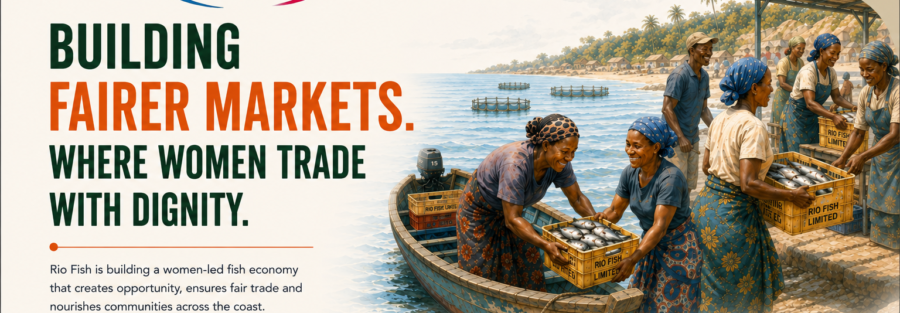
A Women-Led Aggregator Is Rewriting Who Controls Kenya’s Fish Supply Chain: #SankalpChangemakers features Angela Odero, Co-Founder and CEO of Rio Fish Limited
Along Lake Victoria's Kenyan shore, a decades-old practice known locally as jaboya has forced many women fish traders into transactional sex with fishermen just to secure the day's catch. The practice is well documented by researchers and journalists covering the region, has been linked to elevated HIV infection rates in fishing communities, and is intensified, research shows, by dwindling wild fish stocks. For Angela Odero, the problem was never abstract. Her first real encounter with aquaculture came years before she founded Rio Fish, typing up her mother's graduate research on how jaboya was fueling HIV transmission around the lake.
By Margaret Nakunza
That early exposure stayed with her, and years of visiting her home village made it personal. One encounter in particular has stayed with Odero: a promising young woman named Achieng, who ended up married to an older boat owner so that her mother, a fish trader, could keep access to fish supply. “She had dreams and a promising future and this was all lost,” Odero says.
After living in Uganda for seven years and getting pulled further into fish farming there, Odero put her own savings into her first aquaculture investment in 2014, convincing her husband to back the idea too. The early going was rough: a shaky start on the farm, a theft that forced a staff reshuffle and a new CCTV system, and a steep learning curve working with the Beach Management Units that govern access to the lake. By 2018, the venture had grown into something more formal: Rio Fish, spun out as its own company from Odero’s existing consultancy and real estate businesses to focus entirely on aquaculture.
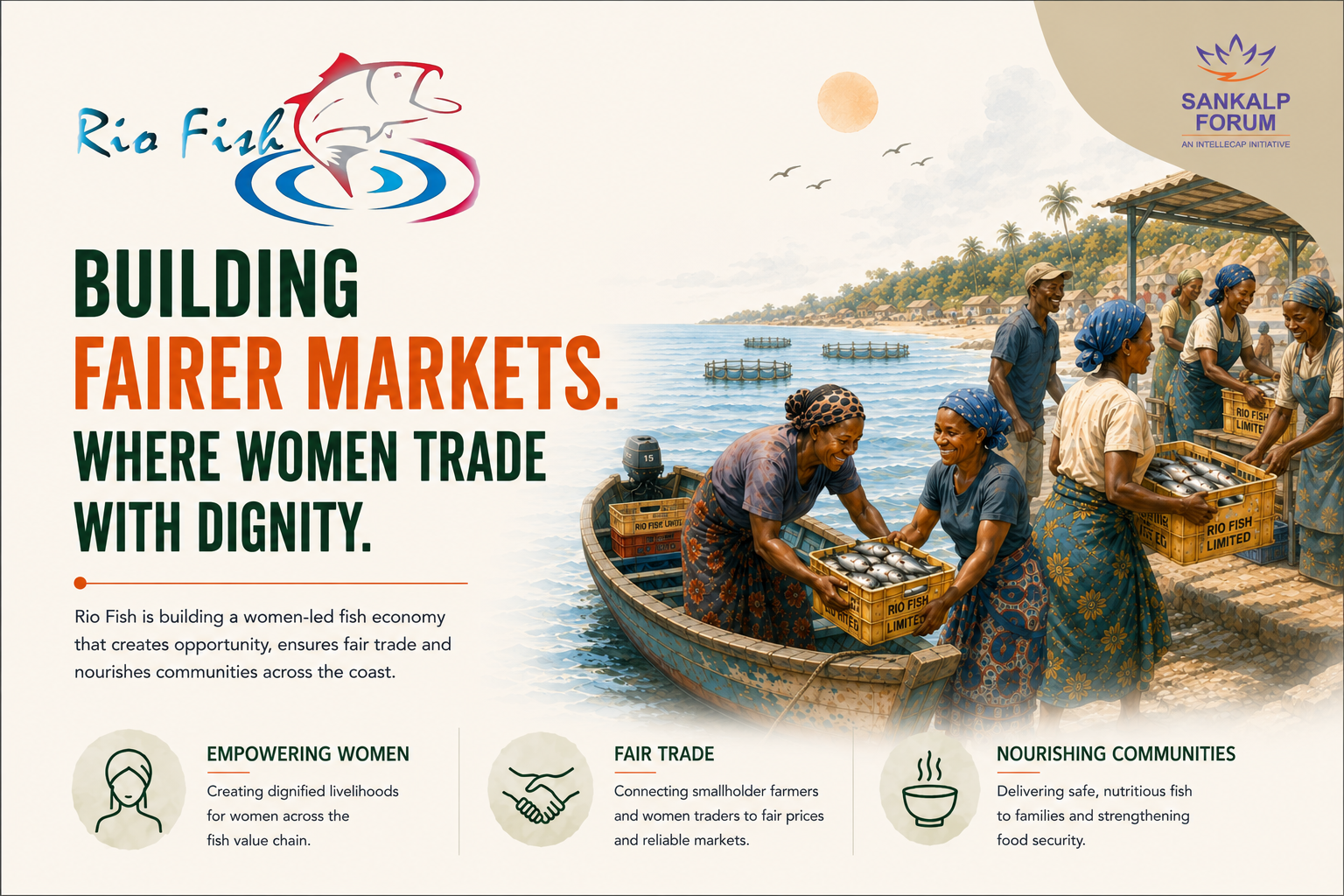
Seven years on, Rio Fish is a women-led aggregator, processor, and distributor of farmed fish, built to solve the specific problem that shaped its founder’s own history: giving women reliable, dignified access to fish supply that doesn’t run through a fisherman’s demands. The company aggregates fish from more than 1350 smallholder farmers, owns a processing plant in Kisumu with a 3000 tonnes-per-year capacity, runs a long-leased processing plant in Migori with 5,000 tonnes-per-year capacity, operates a 350-tonne model farm in Homa Bay, and supplies more than 500 women traders daily, reaching an estimated 19,000 households. Headquartered in Nairobi with hubs in Migori, Kisumu, and Homa Bay, the company has spent seven years building infrastructure most fish businesses in the region never reach: five cold-chain trucks, ten chiller units, and a processing line producing traditional delicacies of dried and smoked fish, fillets, and new products coming soon.
The Technology Behind the Model
Rio Fish’s pitch to farmers rests on data, not just training. Affordable dissolved-oxygen, pH, and temperature sensors sit in cages and ponds, pushing continuous readings and flagging farmers when water quality drifts outside a healthy range. A feeding advisory model built on that same data recommends optimal feeding times and quantities, cutting feed waste, typically a small farmer’s single biggest cost, by around 30%. To keep the technology affordable, groups of 5 to 10 farmers share sensor clusters and split the hardware cost. “Proper site selection happens before a single shilling is spent on pond construction or cage installation,” Odero says. “This will determine the success or failure of the farm.” Independent reporting on the sector corroborates the broader approach: in Homa Bay specifically, internet-of-things sensors in cages have been documented monitoring water temperature and issuing feeding and restocking alerts.
The model is deliberately not a purely imported one. Extension officers train farmers on disease identification, feed use, and record-keeping using basic phones or paper, grounded in each farm’s own sensor data so conversations stay specific rather than generic. Seasonal fish behaviour patterns known to elder fishermen, and native plant species used as supplementary feed, are validated against scientific data where possible and folded into advisory calendars, a deliberate choice to treat indigenous knowledge as a real input rather than a courtesy nod.
Proof in the Numbers
Rio Fish’s exact revenue figure for 2025 revenue is USD 1.5 million, on a trajectory from USD 1.1 million in 2024 to a targeted USD 3.8 million by 2030: more than 1350 smallholder farmers engaged, 765 traders served daily, roughly 19,000 households impacted, and about 60 direct jobs, of which 70% are held by youth. Independent reporting adds a further data point directly from Odero: Rio Fish employs 28 women as full-time staff, which she says makes up 70% of the company’s workforce, with women holding around 80% of management positions.
The company has raised USD 2.0 million in capital to date, through a mix of equity, debt, and grants. One piece of that funding is independently verifiable: in 2023, Rio Fish received a KES 56 million grant, roughly USD 384,000, from the Africa Enterprise Challenge Fund’s Investing in Women in the Blue Economy in Kenya programme, funded by Global Affairs Canada, specifically to fund seed capital and training for women in the value chain.
A Market That’s Real, Not Assumed
Kenya’s fish supply gap is not a number Rio Fish invented for its pitch deck. Independent estimates of the shortfall vary by year and source, ranging from roughly 200,000 to 450,000 tonnes annually, with the most recent government-linked figures putting it near 450,000 tonnes against national demand of around 500,000 to 600,000 tonnes. Rio Fish’s own figure, a supply gap of over 400,000 tonnes in a market it values above USD 1 billion, sits squarely inside that range.
The company is also not alone in chasing the opportunity. Rio Fish names Victory Farms, Bay Rise, Yalelo, and Lake VDiew Fisheries as production-stage peers, and Aquarech and KeepITCool as market-linkage competitors, while positioning itself as a rarer, vertically integrated player spanning production, aggregation, processing, cold chain, and retail. One of those names has its own independent ties to the same cause Rio Fish is built around: Victory Farms is a partner in the Darwin Initiative, a 2021 to 2024 project with Pathfinder International, Conservation International, and Fauna & Flora that distributed boats and nets to women’s fishing groups in Homa Bay as a separate attempt to break the jaboya cycle.
Institutional Backing
Rio Fish’s funder list reads less like a single grant and more like a coalition: ygap, Open Society Foundations, Gatsby Africa, ACMS, Opes Impact Fund, MEDA, and the Africa Enterprise Challenge Fund all appear as funding partners, alongside regulatory relationships with Kenya’s national government, the Kenya Fisheries Service, the Kenya Marine and Fisheries Research Institute, and the Lake Victoria Fisheries Organization. The company also lists partnerships with five Ccounty Ggovernments, including Nairobi, Homa Bay, Migori, Kisii, and Kisumu, as it plans its next phase of expansion. Odero traces this network back to the earliest days of the farm, when a grant from the Open Society Foundation funded the first batch of fingerlings and feed for the smallholder groups she was building trust with.
Leadership
Odero leads Rio Fish as CEO and co-founder, alongside Nixon Shikuku, a finance professional with a background in the fish value chain, as co-founder and director..
The Road Ahead
By 2030, Rio Fish is targeting more than 5,000 supported fish farmers and 2,000 women traders served, alongside a Pan-African footprint it describes as a replicable franchise model. Odero’s own account of success is more expansive still: for Rio Fish, she says, successful scale over the next three to five years means building a sustainable, inclusive aquaculture ecosystem with meaningful impact across production, livelihoods, and food security, including a goal of directly integrating more than 5,000 women and youth into the value chain and empowering at least 10,000 through production, aggregation, processing, and enterprise development, a larger figure than either company deck currently states as an official target.
Of the challenges standing in the way, capital is the one Odero names as most pressing. “Rio’s biggest hurdle in transitioning from pilot to commercial scale has been securing sufficient working capital and infrastructure to support a reliable, year-round fish supply chain,” she says. Production consistency, quality input availability, and evolving regulatory requirements around water use, food safety, and environmental compliance round out the list. Her advice to other founders in the sector is blunt: know what will propel the business, understand its cashflows, match financing to actual growth needs, and negotiate hard.
Editor’s Note
Rio Fish won the AgriTech category at the Sankalp Africa Awards 2026, held 25 to 26 February at the Sarit Expo Centre in Nairobi, recognised for its women-led aquaculture model strengthening food systems and economic opportunity around Lake Victoria.
Angela Odero is Co-Founder and CEO of Rio Fish Limited, headquartered in Opapo,Migori County Kenya. Rio Fish aggregates, processes, and distributes farmed fish through a network of smallholder farmers and women traders across Western Kenya, and has been independently recognised for its work combating the sex-for-fish trade on Lake Victoria.
References: FairPlanet, Women’s empowerment programmes help break the sex-for-fish cycle in western Kenya, February 2026; The Fish Site, Women in aquaculture: Angela Odero, 2023; The Fish Site, Dynamic Kenyan duo secure game-changing investments, 2024; MEDA, Hooked on Equality: How Rio Fish is Transforming Fish Farming in Kenya, October 2025; TheNextAfrica and Business Radar, Sankalp Africa Awards 2026 coverage, February 2026; The Fish Site, How can Kenya fulfil its untapped aquaculture potential, 2022; Dialogue Earth, Kenya looks to mariculture as fish demand outstrips supply, December 2023; Daily Nation, Kenya’s fish exports drop for the first time in four years, March 2025; Feed Business Middle East & Africa, Kenya launches youth-led aquaculture initiatives, March 2026; Rio Fish Limited investor pitch deck and impact deck, 2026.